

 in Kosher Food
Mansoura: Brooklyn’s Time-Honored Middle Eastern Bakery with 200+ Years of Heritage
When you step into Mansoura on Kings Highway in Brooklyn’s Gravesend neighborhood, you’re not just entering a bakery; you’re walking into a living piece of culinary history that stretches back more than two centuries. This kosher gem represents one of the most remarkable stories of tradition, migration, and unwavering commitment to quality in New York’s diverse food landscape.
A Journey Through Time and Continents
The Mansoura family’s baking legacy began around 1780 in Aleppo, Syria, where they established their first bakery. The family name itself—Mansoura, meaning “victory” in Arabic—would become synonymous with excellence in Middle Eastern pastries throughout their journey across continents.
By 1910, Alan Mansoura’s grandfather had moved to Cairo and opened another Mansoura location, this time a bakery-turned-cafe that would become legendary throughout Egyptian society. The clientele was illustrious: according to the New York Times, King Farouk himself was among the customers. Their pastries, always kosher, were favored across all segments of Cairo’s cosmopolitan community. According to the bakery’s history, the Mansoura name remained so iconic that it’s still visible on their former shop in Cairo decades after their departure.
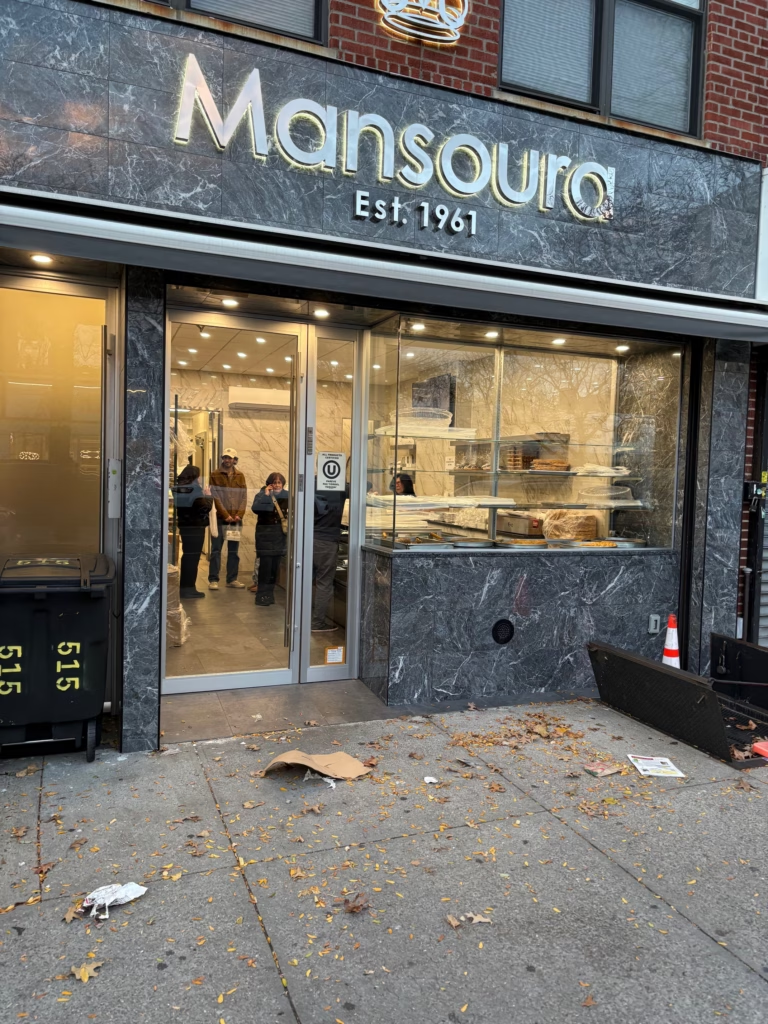
As the situation for Egypt’s Jewish community deteriorated in the 1950s, with growing animosity toward Jews throughout the region, the Mansoura family left Cairo, spending time in Paris while waiting for their U.S. visas. In 1961, they opened the Brooklyn location at 515 Kings Highway, bringing centuries of family recipes and expertise to New York. The Syrian Jewish community in Brooklyn already knew the name, and word quickly spread about the legendary bakery’s arrival.
The Family Behind the Pastries
Today, the bakery is run by Josiane Mansoura, 63, along with her sons Jack (29) and David (41). Josiane’s late husband Alan was part of the Mansoura lineage that stretches back to 18th-century Aleppo. The family continues to work the same way their ancestors did. Jack and David can be found in the kitchen between the FireMixer and sheet pan racks, shaping and cutting sweets. At the same time, Josiane manages the front counter, often chatting with customers on the phone in English, Hebrew, French, or Arabic, taking orders for events around the world. Unlike many commercial Middle Eastern bakeries that cut corners with inferior ingredients, the Mansouras maintain their commitment to quality that has defined their reputation for generations.
When pastry chef and author David Lebovitz visited Mansoura, he spent nearly three hours at the bakery and left wanting to return immediately. He noted that the difference in quality was apparent from the first bite as the Mansouras use real honey instead of glucose syrup and only the finest, freshest nuts.
The Signature Pastries
Baklava
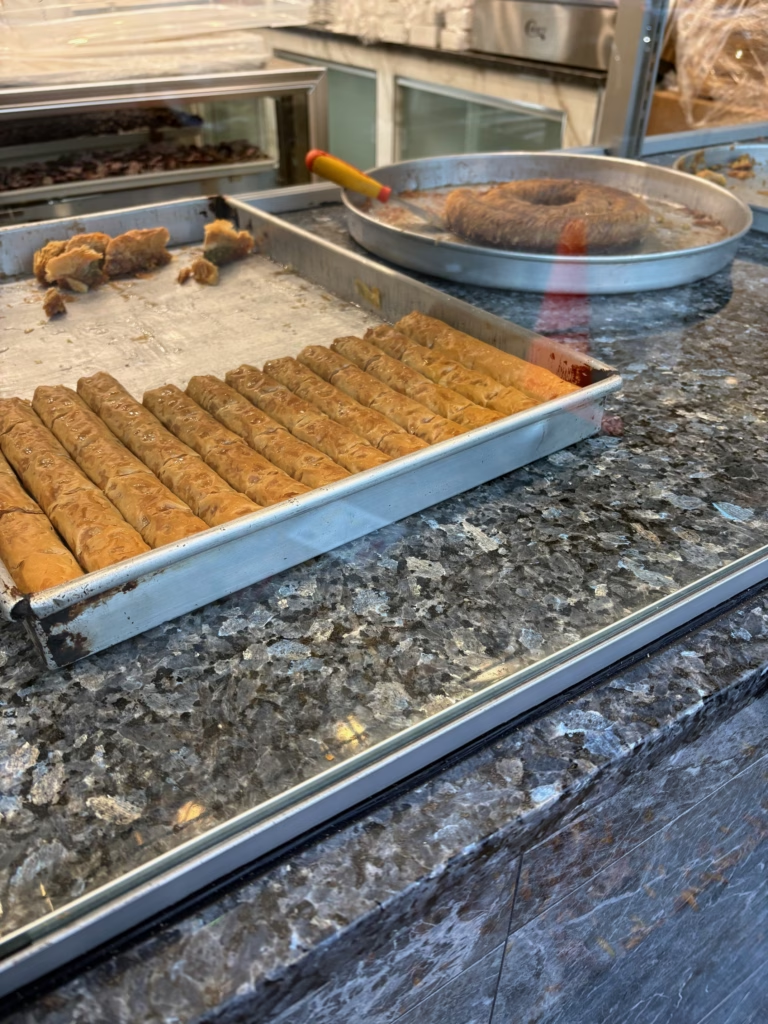
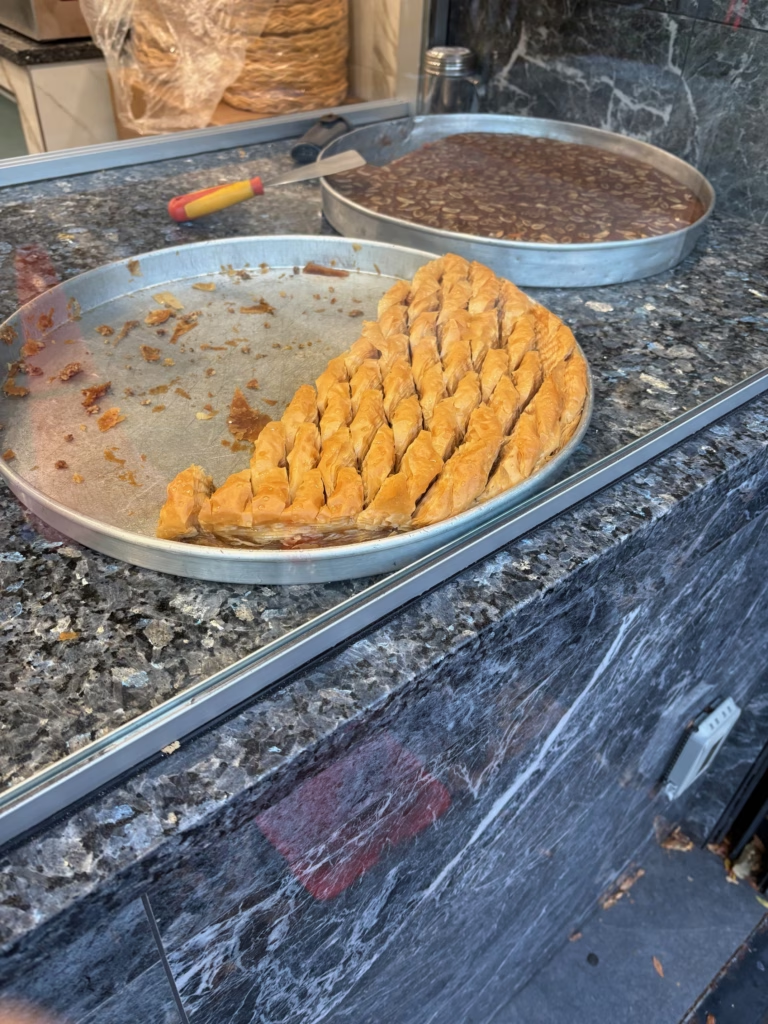
The crown jewel of Mansoura’s offerings is their baklava, rumored to contain seventy individual layers of phyllo dough. Each piece is meticulously crafted with multiple fine layers of hand-rolled filo dough, premium nuts (pistachio, walnut, or almond), and a delicate orange blossom-infused syrup. The result is a pastry that is both crisp and tender, sticky yet distinct in every layer.
The bakery’s baklava comes in several varieties, with the pistachio and walnut versions being particular favorites. The attention to detail is extraordinary as these aren’t mass-produced pastries but handcrafted works of edible art.
Ma’amoul
These decorative cookies are a specialty that showcases the Mansouras’ Syrian heritage. Ma’amoul are traditional Middle Eastern cookies made in distinctive fluted molds, typically filled with either date paste or freshly ground pistachios and dusted with powdered sugar.
According to a Forward article on Purim treats, the pistachio ma’amoul at Mansoura features freshly ground Turkish pistachios, creating a green filling that is “simultaneously heady, vegetal, and sweet—unlike anything I’ve ever tasted.” The date-filled versions feature a crispy shell that yields to a sweet, jammy interior.
These cookies are popular for Jewish holidays, particularly as a treat for Rosh Hashanah, and the bakery also sees customers from the broader Middle Eastern community purchasing them for holidays throughout the year.
Basbousa
This exceptionally moist semolina cake represents the best of Egyptian-style pastries. Made with semolina, a hint of coconut, and topped with sliced almonds, the basbousa is moistened with a perfectly balanced syrup that’s sweet but not cloying. According to Lebovitz, when Josiane Mansoura added a spoonful of rich cream (which she called “butterfat”) on top, it elevated the already excellent cake to another level entirely.
Knafeh
One of the shop’s most sought-after items is knafeh (also spelled kunafa), an Arabic dessert typically made with shredded phyllo dough and cheese, soaked in sweet syrup. Writer Stanley Mieses told the New York Times that the knafeh at Mansoura was some of the best he’d ever tasted in New York. A pro tip: order the darker, crunchier pieces from the edges of the pan for the ultimate texture experience.
Kataifi
One of the most visually striking pastries, kataifi features shredded phyllo dough that looks like fine angel hair. The dough is extruded from a machine in the bakery (you can find videos of this process on their social media), then wrapped around a tight center of pistachios, baked in a spiral, and moistened with a light orange blossom syrup before being sliced. The texture contrast between the crispy shredded dough and the creamy pistachio center is remarkable.
Turkish Delight
While many Turkish delight varieties on the market can be overly sweet or artificially flavored, Mansoura’s version is tender, delicate, and well-balanced. These neat rectangles may not be as flashy or colorful as commercial versions, but the difference in quality is immediately apparent. Made in-house using traditional methods, they showcase the family’s commitment to authenticity.
Apricot Roll
This unique treat features hand-rolled Turkish apricot paste cooked down and formed into cylinders studded with crisp pistachios. The apricots provide a tangy counterpoint to the rich nuts, creating a sophisticated flavor profile that’s both fruity and savory.
Kaak
These ring-shaped crisp biscuits are flavored with anise and make perfect accompaniments to coffee or cocktails. Similar to Italian taralli, kaak travels well and makes an excellent snack or gift.
Graybeh
These shortbread-like cookies are beloved by customers who remember them from the old country. The delicate, crumbly texture and subtle sweetness make them perfect for tea or coffee.
Sambousek
The shop’s refrigerator case occasionally features savory items like cheese sambousek—small hand pies that showcase the family’s range beyond sweets.
Beyond Pastries
Mansoura also produces house-dipped Belgian chocolates, including chocolate-covered marshmallows, buttercrunch, and chocolate-covered orange peels. Their refrigerator case sometimes features rotating savory items like kibbeh and other Middle Eastern specialties, along with house-made caraway-seed cheese that’s perfect for spreading on bread or topping flatbreads.
The bakery also roasts its own pistachios and produces various confections, all maintaining the same high standards that define its pastries.
More Than Just a Bakery
What makes Mansoura special isn’t just the pastries, it’s the sense of community and connection that permeates the shop. As David Mansoura told the New York Times, for many regulars, the pastry shop is a social scene, “like going into the barbershop.”
Customers come from around the world, and Josiane can be found speaking to customers as she moves behind the counter, going from the pastries to the chocolate. Benjamin Douek, an investment banker from Scarsdale, makes the trek to Brooklyn because his father used to talk about Mansoura “from the old country,” referring to the bakery’s legendary Cairo location. When longtime customer Leona Bassan visits from Panama, she notes that returning to Mansoura is “like going back to your family. They know everything about you.”
Private chef Aviv Mosovich, who moved to Brooklyn from Israel 14 years ago, seeks out Mansoura when he’s nostalgic for home. As he told the Times about Josiane’s work: “She uses the right products.” That commitment to quality—what Josiane herself describes as making “only what people like. Rich stuff”—is what keeps customers returning generation after generation.
The Kosher Commitment
All of Mansoura’s products are OU kosher, a more stringent and widely accepted kosher certification than the one the store previously used, which was updated during the store’s renovation. However, being kosher is a distinction the family has maintained throughout their centuries-long history. This commitment to kosher production while preserving authentic Middle Eastern flavors and techniques makes Mansoura particularly special; it’s a place where Syrian Jewish culinary traditions have been preserved in their most authentic form.
The bakery’s location on Kings Highway, in an area where Syrian-Jewish stores line both sides of the street, serves as a testament to Brooklyn’s rich Sephardic Jewish community. Mansoura is perhaps the oldest establishment on this historic corridor, having maintained the same location for over 60 years.
Ordering and Shipping
For those who can’t make it to Brooklyn, Mansoura offers mail order through their website with quick delivery available. They ship their delicacies worldwide, making it possible to enjoy their pastries wherever you are. The bakery’s products also frequently appear at weddings and bar mitzvahs around the world, as people request that family members bring boxes back from Brooklyn.
Gift packages are available, including their signature ma’amoul packed in Mansoura tins. Premium prices that reflect the premium quality and handcrafted nature of these pastries.
Why Mansoura Matters
In an era of mass production and shortcuts, Mansoura stands as a reminder of what happens when a family dedicates itself to preserving tradition while refusing to compromise on quality. The Mansoura family didn’t just bring recipes from Syria to Brooklyn; they brought an entire philosophy of baking that prioritizes the finest ingredients, time-honored techniques, and genuine hospitality.
The Syrian Jewish community’s baking traditions, particularly from Aleppo, are considered among the finest in the Middle Eastern culinary world. With the ongoing tragedy in Syria, places like Mansoura become even more precious as repositories of cultural heritage that might otherwise be lost.
When you bite into a piece of Mansoura’s baklava or ma’amoul, you’re tasting the same flavors that delighted customers in 18th-century Aleppo, 20th-century Cairo, and now 21st-century Brooklyn. It’s a delicious thread connecting generations, continents, and communities—and it’s all happening in a modest bakery on Kings Highway.
Whether you’re a longtime fan or discovering Mansoura for the first time, the warmth of the Mansoura family and the transcendent quality of their pastries make every visit special. In a city full of excellent bakeries, Mansoura stands apart as something truly unique: a living link to centuries of Jewish and Middle Eastern culinary tradition, lovingly preserved and generously shared.
Planning Your Visit
Address: 515 Kings Highway, Brooklyn, NY 11223
Phone: (718) 645-7977
The bakery is located between East 2nd and East 3rd Streets in the Gravesend neighborhood, which is within walking distance of the F and Q train stations.

Comments
Comments are disabled for this post